Plan of Action
4.1. Introduction
The Five-Year Strategic Plan of Action for Mid-West University (MU), spanning from 2082/83-2086/87 BS (2026-2030 AD) outlines a comprehensive roadmap for the University’s transformation into a globally competitive and reputed institution. Building upon its established foundation, the plan is designed to elevate MU’s standing as a premier higher education institution by focusing on key pillars such as academic excellence, research innovation, and sustainability. The plan is rooted in the University's commitment to offering high-quality education that meets both national and international standards, while preparing graduates to contribute meaningfully to the workforce and society at large.
At the heart of the plan is MU’s mission to foster a learning environment that promotes intellectual growth, creativity, and leadership, while simultaneously addressing the challenges and opportunities within Karnali Province and in the broader context of Nepal. The strategy emphasizes the importance of interdisciplinary education, cutting-edge research, and community driven initiatives that respond to the needs of the region. This includes the integration of modern digital tools, infrastructure enhancements, and robust industry partnerships to ensure that students and faculty have access to state-of-the-art resources and opportunities.
The strategic objectives outlined in this plan, spanning academic development, infrastructure expansion, digital transformation, community engagement, and strong governance are interlinked and designed to work in harmony. Each objective is driven by the overarching goal of positioning MU as an institution that not only provides world-class education but also contributes significantly to regional development and national progress. The plan is crafted with an eye toward long-term sustainability, ensuring that the University can adapt to the rapidly changing educational landscape, meet the needs of a diverse student body, and play an active role in advancing Nepal’s higher education sector.
4.2. Strategic Objectives and Action Programs
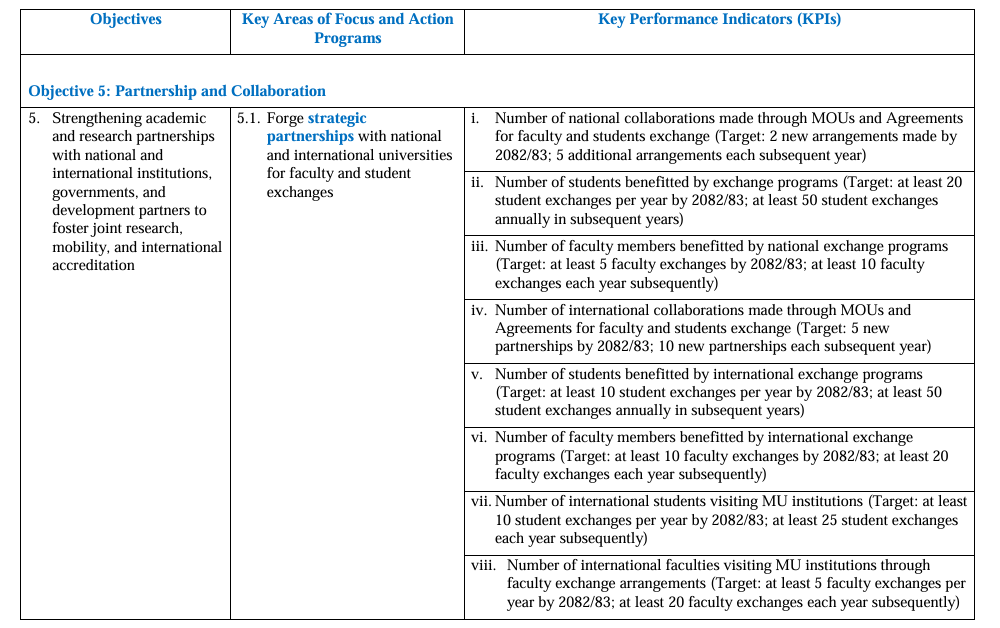
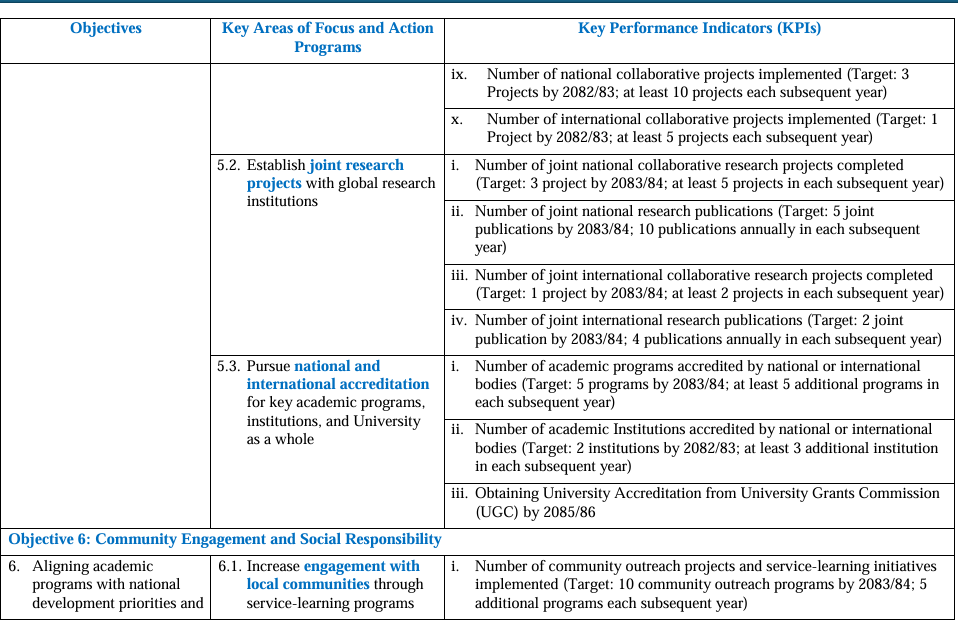
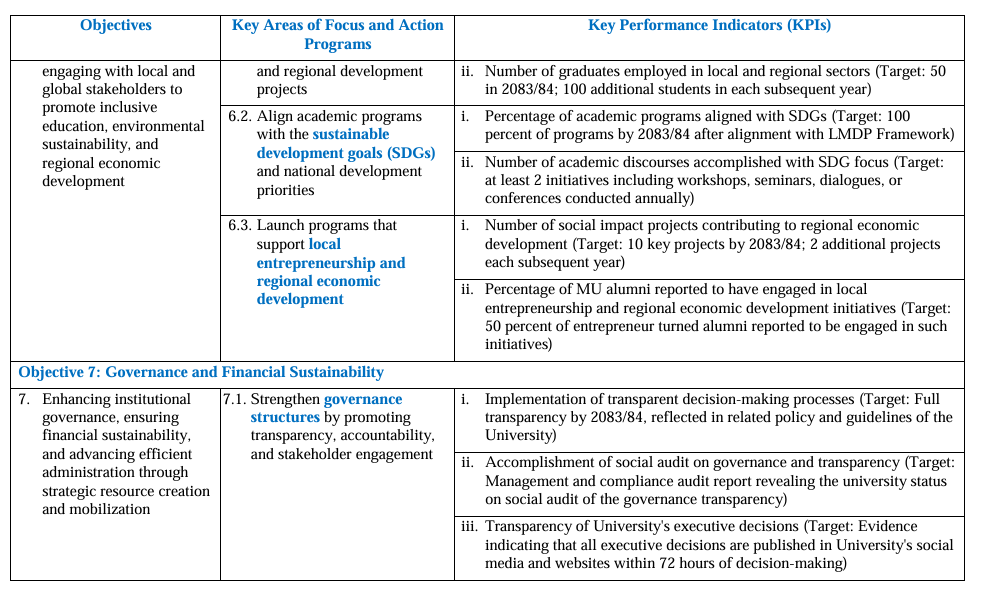
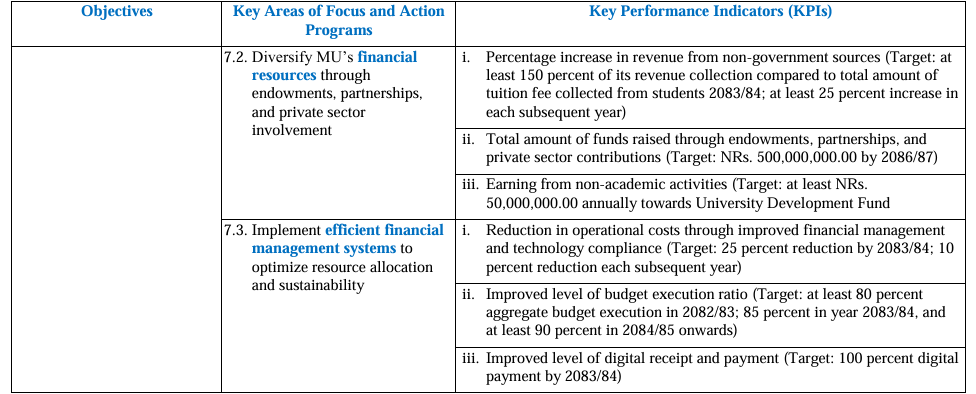
This section articulates the strategic intent of Mid-West University (MU) for the forthcoming five year planning horizon, translating the institution’s vision, mission, and situational diagnosis into a coherent set of transformative objectives and operational priorities. Drawing upon the evidence generated through the S-W-R-F-C-O analysis and stakeholder consultations, the strategic objectives presented below define the core directions through which MU seeks to enhance academic excellence, institutional resilience, governance effectiveness, financial sustainability, and societal relevance, particularly within the unique socio-economic and geographic context of Karnali Province.
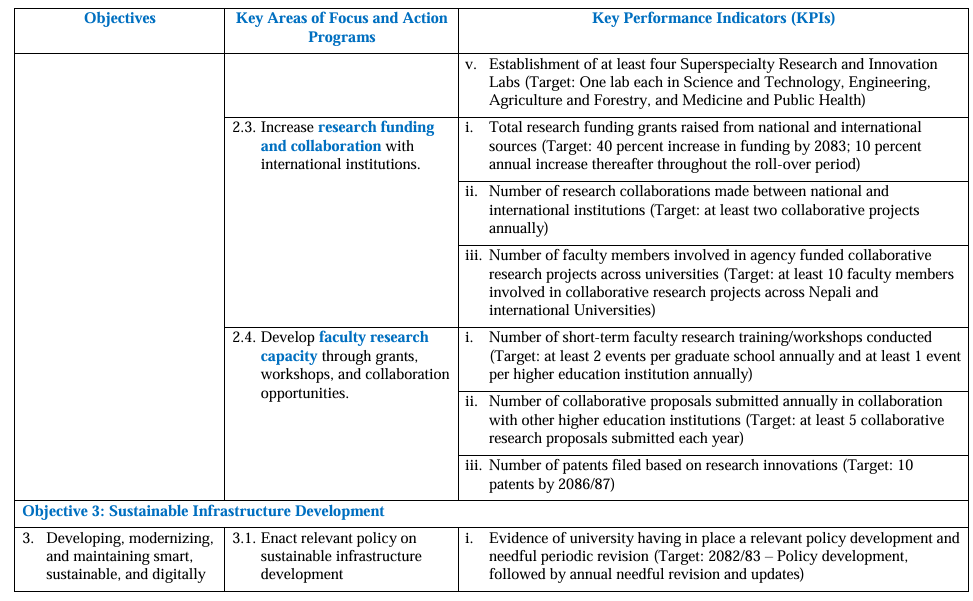
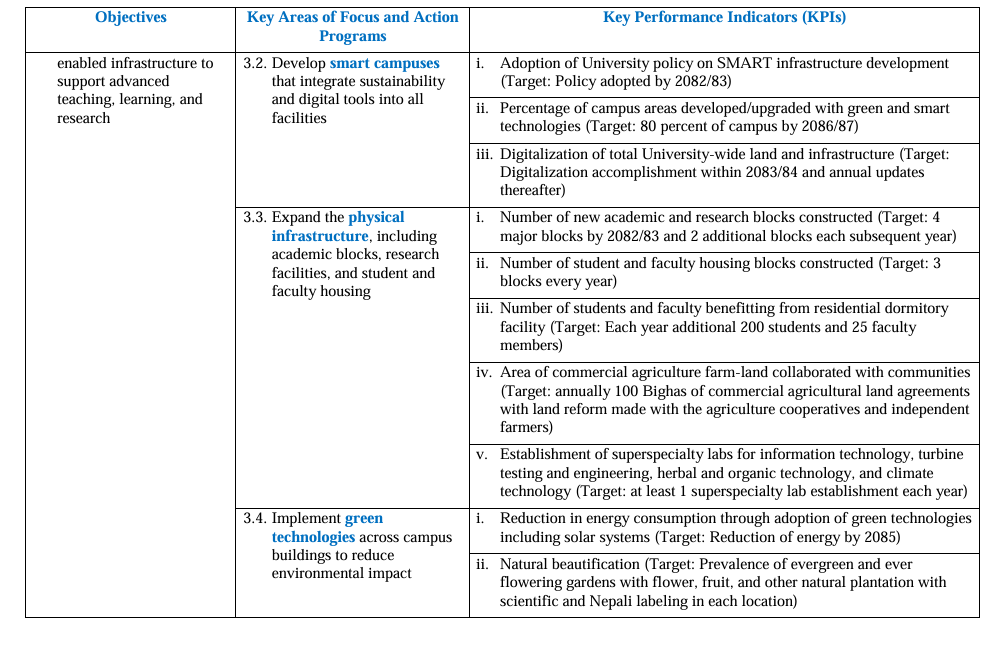
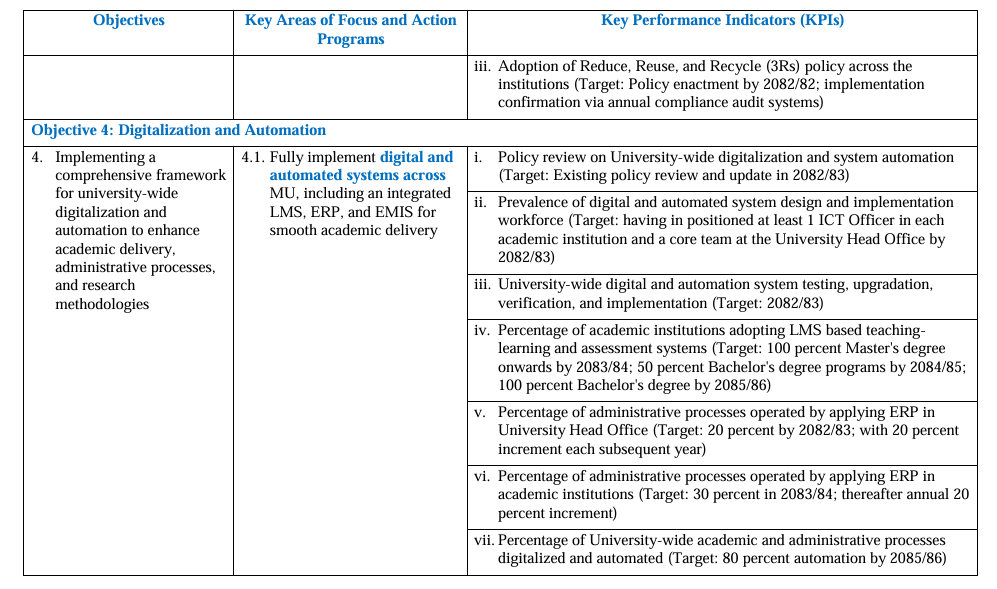
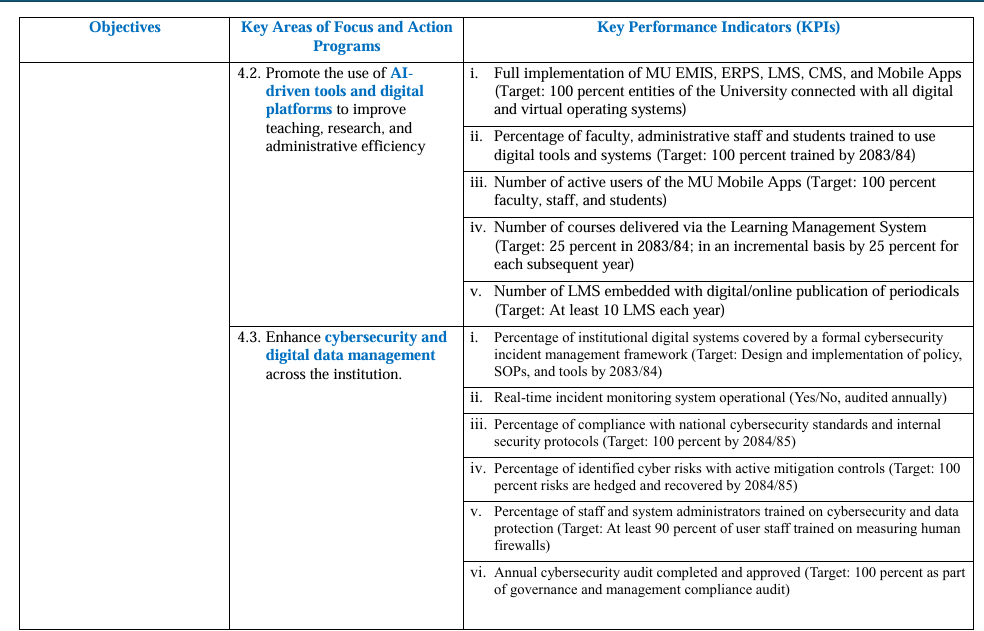
Each strategic objective is systematically unpacked through clearly defined Key Areas of Focus that identify the critical domains requiring intervention, reform, or investment. These are further operationalized through a portfolio of Action Programs that specify what will be done, how it will be done, and where institutional energy and resources will be concentrated during the plan period. Together, this structure ensures that MU’s strategic ambitions are not merely aspirational, but are translated into implementable, sequenced, and accountable initiatives across academic, administrative, financial, and partnership-building functions.
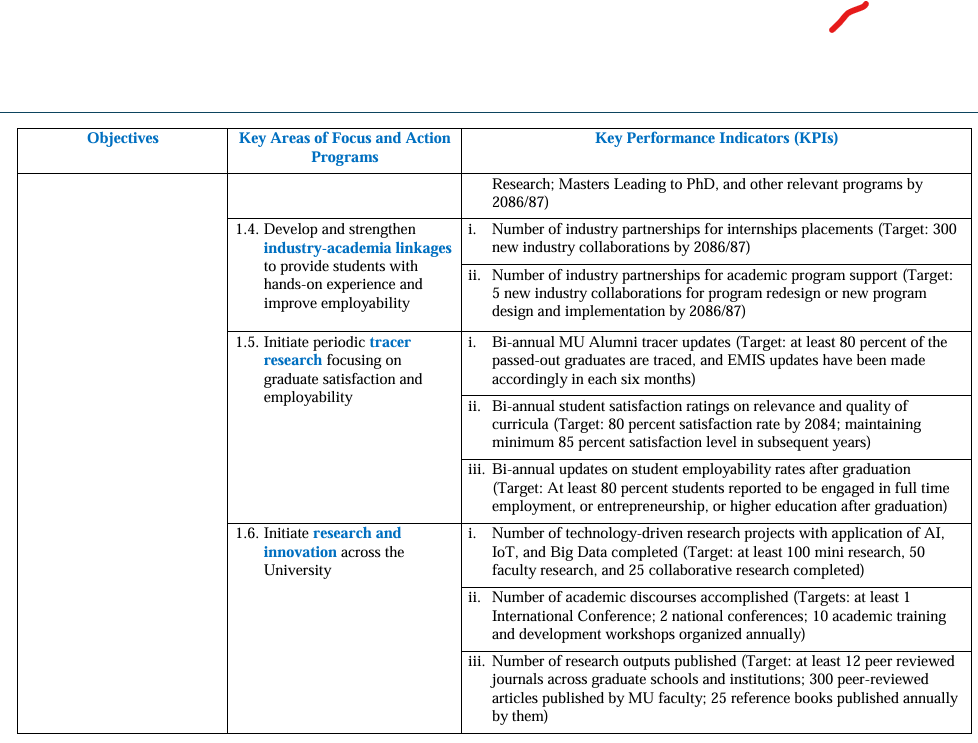
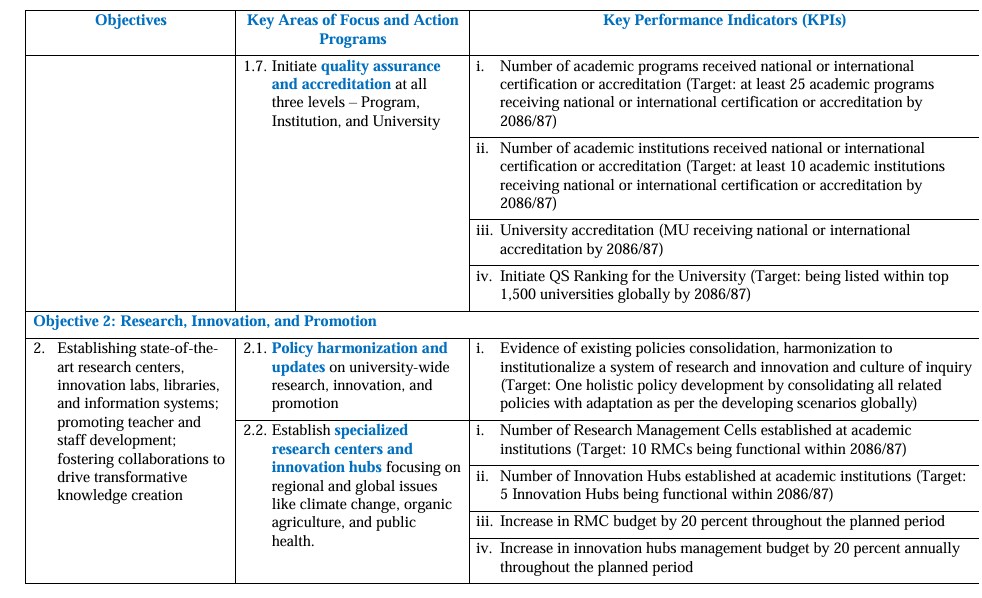
To ensure rigor, transparency, and results-based management, each objective and its associated action programs are supported by measurable Key Performance Indicators (KPIs). These KPIs provide the basis for continuous monitoring, mid-course correction, and performance-based decision-making, enabling MU’s leadership, governing bodies, and stakeholders to track progress, assess impact, and reinforce a culture of evidence-driven institutional development throughout the strategic cycle. 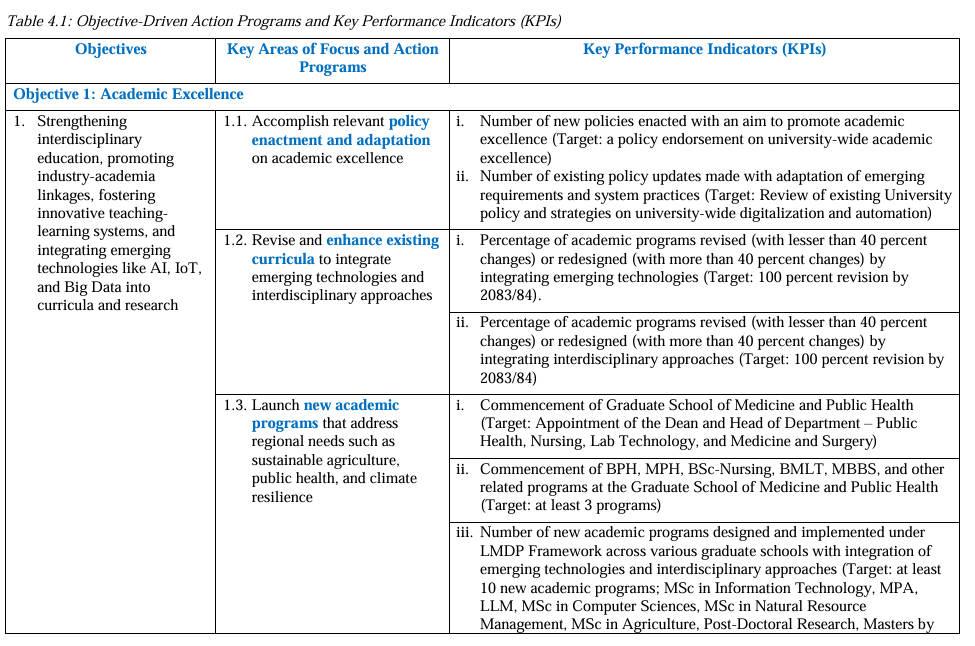
 4.3. Implementation Phases
The implementation of the strategic plan for Mid-West University (MU) will be structured across three key phases, each designed to achieve specific milestones and objectives. The phases will provide clear direction, allowing the University to gradually develop its academic, research, infrastructure, and community engagement capacities. These phases will ensure the effective realization of the strategic goals within the planned timeframe.
Phase I - Foundational Establishment (2082/83): The first phase of the strategic plan will focus on building the foundational infrastructure, implementing critical digital systems, and laying the groundwork for academic excellence. This phase is crucial for setting the stage for the subsequent expansion and optimization efforts. The key activities for this phase have been planned as follows:
i. Curriculum Revisions and Program Development (Objective 1): Begin revising existing curricula to integrate emerging technologies (AI, IoT, Big Data) and interdisciplinary approaches. Launch new programs aligned with regional needs, such as sustainable agriculture, public health, and climate resilience.
ii. Infrastructure Development (Objective 3): Start the construction of key academic buildings, research centers, and student facilities. Focus on creating smart, climate resilient, and sustainable infrastructure, including energy-efficient buildings and modern digital classrooms.
iii. Digital Systems Implementation (Objective 4): Roll out the implementation of the Enterprise Resource Planning (ERP) system, Education Management Information System (EMIS), and Learning Management System (LMS) to streamline administrative and academic functions.
iv. Faculty Development (Objective 1, Objective 2): Launch a faculty development program focused on enhancing teaching skills, research capabilities, and the adoption of digital tools. Provide training on innovative pedagogies and the integration of new technologies into teaching.
This will be made possible through (1) at least 50 percent of curricula revised to integrate new technologies; (2) accomplishment of key infrastructure projects (academic buildings, research labs, and students housing); (3) full deployment of ERP and EMIS systems; (4) At least 80 percent of faculty trained in digital tools and new teaching methodologies.
Phase II - Expansion and Engagement (2083-85): In Phase II, MU will expand its academic offerings, enhance community engagement, and complete major infrastructure projects. This phase is about scaling up and integrating new academic programs, establishing strong community connections, and expanding the University’s presence in the national and regional education landscape.
These are the key activities planned for this phase:
i. Expansion of Academic Programs (Objective 1): Expand the range of academic programs, especially interdisciplinary and demand-driven ones, including programs in regional development areas such as governance, sustainable agriculture, and climate science. Also introduce academic programs in the areas of medicine, public health, organic agriculture, recreation, and forestry sciences.
ii. Community Engagement (Objective 6): Deepen MU’s involvement in regional development by expanding community outreach programs, service-learning opportunities, and initiatives that directly address local challenges. Partner with local governments and NGOs to support rural healthcare, entrepreneurship, and education.
iii. Infrastructure Development (Objective 3): Complete the construction of critical infrastructure projects, including the superspecialty labs, teaching hospital, research centers, student housing, guest houses, and green campus facilities. Ensure that all new buildings are fully functional and equipped with state-of-the-art facilities.
iv. International Partnerships (Objective 5): Formalize collaborations with international universities, research institutions, and development partners. Strengthen academic exchange programs, joint research projects, and faculty mobility.
v. Research Focus (Objective 2): Begin the establishment of research centers and innovation hubs. Encourage interdisciplinary research in areas like climate resilience, public health, and rural development.
Successful execution of this phase of five-year plan will result in (1) at least 30 percent increase in the number of students enrolled in new programs; (2) establishment of at least 10 international partnerships; completion of major infrastructure projects (research labs, teaching hospital, housing facilities); (3) at least 25 percent increase in community-based projects and partnerships.
Phase III - Optimization and Global Positioning (2085-87): The final phase will focus on optimizing systems, enhancing global partnerships, and positioning MU for global recognition. The University will consolidate its efforts to enhance academic quality, strengthen its international reputation, and ensure financial sustainability.
The University will witness accomplishment of these activities during this phase of strategic planning:
i. System Optimization (Objective 4, Objective 7): Fine-tune digital systems (ERP, EMIS, LMS) based on feedback and performance data. Improve data analytics, enhance cybersecurity, and optimize the efficiency of administrative and academic operations.
ii. Continuity to Infrastructure Development (Objective 3): Continue completion of additional construction of critical infrastructure projects, including the superspecialty labs, teaching hospital, research centers, student housing, guest houses, and green campus facilities. Ensure that all new buildings are fully functional and equipped with state-of-the art facilities.
iii. Global Partnerships and Rankings (Objective 5, Objective 1): Secure international accreditations for key programs, strengthen existing global partnerships, and position MU for inclusion in international university rankings. Focus on enhancing MU’s visibility and reputation in global higher education networks.
iv. Research Excellence (Objective 2): Expand MU’s research output and international collaborations. Encourage faculty and students to publish in top-tier international journals and present at global conferences. Secure funding for large-scale research projects.
v. Financial Sustainability (Objective 7): Diversify MU’s funding sources through endowments, private sector partnerships, and innovative financing models. Establish an endowment fund and increase revenue generation from external research grants and strategic collaborations.
vi. Community Impact (Objective 6): Continue to engage with the local and regional communities, ensuring MU’s education and research programs continue to meet the evolving needs of the community.
By the end of this phase, the University will: (1) achieve international accreditation for at least 5 key academic programs; (2) increase MU’s research publications by 50 percent, with a focus on international collaborations; (3) secure at least 40 percent of the University’s funding from non government sources (private sector partnerships, research grants, development agencies); (3) Position MU in the top 2000 of global university ranking.
This phased implementation plan provide a clear roadmap for MU to achieve its strategic objectives over the next five years. Phase I will establish the necessary foundations, Phase II will expand MU’s academic and community engagement efforts, and Phase III will optimize operations and position the University on the global stage. Each phase builds on the previous one, ensuring that MU develops progressively and adapts to both internal and external challenges. Through careful planning, execution, and assessment, MU will emerge as a leading institution in Nepal and beyond, contributing significantly to education, research, and community development.
4.4. Monitoring, Evaluation, Accountability, and Learning (MEAL)
To ensure the effective implementation of the Five-Year Strategic Plan of Action (2082/82 2086/87), Mid-West University (MU) will establish a robust system for Monitoring, Evaluation, Accountability, and Learning (MEAL). This system will be critical in tracking the progress of strategic initiatives, measuring their impact, and fostering continuous improvement. The MEAL framework will not only assess whether activities are being executed as planned but also provide insights on how well the University's strategies are achieving their desired outcomes and contributing to long-term goals. This approach ensures transparency, informed decision-making, and accountability at all levels. In coordination with various entities, committees, and work teams, Planning, Development, and Monitoring Directorate (PDMD) will undertake the task of overall accomplishment of MEAL initiatives of the University.
Monitoring will be the first component of the MEAL framework, focused on tracking ongoing activities, ensuring they are aligned with the University's strategic objectives, and identifying potential issues early. The monitoring process will involve regular data collection from various departments, academic programs, and projects, through key performance indicators (KPIs) identified for each strategic objective. Monitoring will take place through monthly and quarterly reports generated by each department and campus, and these will be reviewed by the University’s central administration. The use of digital tools and systems such as the Enterprise Resource Planning (ERP) and Education Management Information System (EMIS) will play a pivotal role in real-time tracking and data management, enabling quick assessments and timely interventions.
Evaluation will be conducted at strategic intervals to assess the overall effectiveness and impact of the planned activities. Evaluation will focus on determining whether the objectives set out in the strategic plan are being achieved, the quality of the outcomes, and whether the desired impact is being realized at the institutional, community, and national levels. Both formative evaluations (conducted during the implementation phase to provide insights for adjustments) and summative evaluations (conducted at the end of each major phase or at the conclusion of the plan period) will be conducted. External evaluators with expertise in higher education, research, and development will be engaged to ensure impartiality, objectivity, and alignment with international best practices.
Accountability will be a core principle throughout the MEAL process, ensuring that the University remains responsible to all stakeholders, including students, faculty, staff, partners, donors, and the local community. To uphold accountability, MU will create clear mechanisms for stakeholders to voice concerns, provide feedback, and participate in the decision-making process. This will involve regular consultations with key stakeholders, such as community leaders, industry partners, and government representatives, through focus groups, town hall meetings, and surveys. Transparency in the use of resources, including the publication of financial reports and project progress, will be essential in building trust and demonstrating that MU is fulfilling its commitments.
Learning will be embedded within the MEAL framework as a continuous feedback loop aimed at fostering improvement and innovation. As part of the learning process, the results of monitoring and evaluation will be used to identify strengths, weaknesses, and opportunities for growth. This data will inform future planning, guide decision-making, and facilitate adaptive strategies to overcome challenges encountered during implementation. Regular knowledge-sharing platforms, such as workshops, seminars, and internal reports, will ensure that lessons learned are disseminated across the University and that stakeholders are kept informed of progress. Additionally, a learning culture will be cultivated within MU, encouraging experimentation, innovation, and the iterative refinement of strategies.
To further strengthen the MEAL framework, institutionalized review processes will be established. These reviews will be conducted annually, in which departments and key stakeholders assess performance against strategic objectives. The reviews will be comprehensive, looking at both quantitative data (such as KPIs, financial records, and student outcomes) and qualitative data (such as stakeholder feedback and faculty insights). This process will ensure that the University remains agile and responsive, capable of refining its approach and realigning resources where necessary. MU will also empower PDMD to act as a dedicated MEAL Unit responsible for coordinating all aspects of monitoring, evaluation, accountability, and learning, which will report directly to the University leadership.
In conclusion, the MEAL framework will serve as the foundation for ensuring that MU’s strategic plan is implemented efficiently and effectively. By systematically tracking progress, assessing outcomes, ensuring accountability, and fostering a culture of continuous learning, MU will not only improve its internal operations but also enhance its long-term impact. The MEAL system will provide critical insights into how well MU is meeting its objectives, allow for data-driven decision making, and ensure that the University remains responsive to the evolving needs of its stakeholders and the broader educational environment.
4.5. Conclusions
This section has outlined a strategic approach for Mid-West University’s infrastructure, digital transformation, and sustainability initiatives. To provide a comprehensive and evolving paradigm based structure and design, the integration of AI, IoT, and Big Data into the curricula and research is key to enhancing academic offerings, improving operational efficiency, and preparing students for future technological advancements.
These technologies will be seamlessly woven into the university's academic programs, ensuring that both students and faculty are equipped with the necessary skills and tools for tomorrow's challenges. The incorporation of AI-driven research methodologies and data analytics aligns with the institution's goal of fostering innovation and maintaining global competitiveness. Furthermore, the emphasis on smart infrastructure, including the development of high-tech laboratories and digital platforms, will create an adaptable and resilient learning environment.
In addition to technological advancements, Mid-West University is also committed to sustainability. The focus on green campus initiatives, including energy-efficient buildings and eco friendly practices, highlights the university's dedication to environmental responsibility. By embedding sustainability into every aspect of its operations, from infrastructure development to community engagement, the university is poised to make a significant impact on both local and global scales.
Finally, the strategic plan stresses the importance of collaboration, both locally and internationally. By fostering partnerships with global institutions, the university enhances its academic offerings and research capabilities, positioning itself as a key player in the international academic community. Through these collaborative efforts and continued investment in infrastructure, Mid West University is set to transform into a globally recognized leader in education, innovation, and societal impact.