Situational Analysis
3.1. Introduction
This section presents a comprehensive situational analysis of Mid-West University (MU), situating its current landscape and competitive positioning within provincial, national, and international contexts. It systematically examines the University’s Strengths, Weaknesses, Risks, Foresight Factors, Challenges, and Opportunities (S → W → R → F → C → O) to provide a clear understanding of both internal capabilities and external dynamics.
By assessing key stakeholders, sectoral trends, and emerging higher education patterns, this analysis identifies strategic priorities for institutional growth, innovation, and performance enhancement. The section also highlights MU’s academic and research portfolio, with a focus on the development of new programs in Health Sciences, Engineering, Information Technology, Agriculture and Forestry, and Policy Studies.
Further, it also calls upon the University’s commitment to quality assurance, accreditation, and collaborative partnerships that enhance teaching, learning, and research outcomes. The establishment of state-of-the-art embedded laboratories and research centers exemplifies MU’s dedication to academic excellence, knowledge creation, and innovative capacity-building. Overall, this analysis provides the foundational insights necessary to inform strategic planning, resource allocation, and long-term institutional development.
3.2. Strategic Positioning
Mid-West University (MU) operates within a dynamic and increasingly competitive higher education sector in Nepal and a maturing global landscape, with specific emphasis on the socio economic and geographic context of Karnali Province. A thorough understanding of this environment is essential for identifying strategic opportunities and potential threats, thereby guiding MU’s positioning and growth strategies. This analysis positions MU within the national, provincial, and specialized higher education ecosystem, highlighting the key factors that define its strategic strengths and opportunities for differentiation.
National Context: Nepal’s ongoing federalization has emerged as a transformative national initiative aimed at deepening democracy, accelerating balanced regional development, and advancing inclusive socio-economic development and prosperity. The restructuring of the state into federal, provincial, and local tiers has reshaped governance, resource allocation, public service delivery, and development priorities across sectors. Within this evolving federal architecture, higher education has become a strategic driver of human capital formation, innovation, and regional competitiveness, with universities increasingly expected to respond to localized needs while contributing to national development goals. It is against this backdrop of federal transition and development aspirations that Nepal’s expanding and diversifying higher education system that comprises federal, provincial, and autonomous institutions must be reflected upon.
Nepal’s higher education sector comprises a mix of Federal and Provincial Government owned Universities, and autonomous institutions, each contributing to the country’s academic ecosystem. Alongside MU (established 2010), prominent federal universities include Tribhuvan University (1959), Nepal Sanskrit University (1986), Kathmandu University (1991), Purbanchal University (1995), Pokhara University (1997), Lumbini Bouddha University (2005), Far-Western University (2010), Agriculture and Forestry University (2010), Nepal Open University (2016), Rajarshi Janak University (2017), and University of Nepal (2024). These institutions possess established reputations, extensive academic networks, and diverse program offerings that attract students nationally and internationally.
Specialized autonomous institutions include the National Academy of Medical Sciences (1889), Pokhara Academy of Medical Sciences (1962), B P Koirala Institute of Health Sciences (1993), Patan Academy of Health Sciences (2008), Nepal Academy of Fine Arts (2009), Karnali Academy of Health Sciences (2011), Rapti Academy of Health Sciences (2017), Nepal Music Academy (2017), and Madhesh Institute of Health Sciences (2021). These institutions often receive federal government support and cater to niche educational and professional needs.
The recent expansion of provincial universities including Manmohan Technical University (2019, Koshi Province), Gandaki University (2019, Gandaki Province), Madhesh Agriculture University (2021), Madhesh University (2022, Madhesh Province), Madan Bhandari University of Science and Technology (2022, Bagmati Province), and Lumbini Technical University (2022, Lumbini Province) has further diversified Nepal’s higher education ecosystem, raising the bar for program innovation, research excellence, student engagement, and wider collaboration.
Key Competitive Factors at the National Level include as follows:
i. Program Diversity: Leading institutions offer wide-ranging academic portfolios with specialized programs attracting niche student segments.
ii. Research Output: Competitive universities emphasize research, securing grants, and publishing in high-impact journals.
iii. Infrastructure and Facilities: Access to modern laboratories, libraries, and digital resources enhances institutional appeal.
iv. Global Partnerships: Strong international collaborations create opportunities for student and faculty exchanges, joint research, and global exposure.
In this federalizing context, the expanding network of federal, provincial, and autonomous universities collectively signals a transition toward a more diversified, distributive, and competitive higher education system that is closely intertwined with Nepal’s broader development aspirations and ground realities. Competition is increasingly defined not only by historical reputation, but by each institution’s capacity to contribute to regional transformation through quality teaching, impactful research, innovation ecosystems, and strong engagement with government, industry, and communities. For Mid-West University, the emerging landscape represents both heightened expectations and strategic opportunity: (1) expectations to demonstrate relevance within the federal structure and to respond to the development priorities of Karnali Province, and (2) opportunity to establish itself as a distinctive knowledge hub that links local realities with national and global academic currents. MU’s ability to leverage federal momentum, strengthen partnerships, and deliver evidence-based, socially responsive education will be central to enhancing its competitiveness and fulfilling its mandate in Nepal’s evolving federal era.
Provincial Context: Karnali Province stands not merely as a geographically remote region of Nepal, but as one of the country’s oldest civilizational corridors and historic seats of knowledge creation, cultural exchange, and social autonomy. From the era of the ancient Khas Civilization and the Karnali Kingdom, the region functioned as a strategic hub connecting trans-Himalayan trade routes, indigenous knowledge systems, and rich traditions of learning, healing, governance, spirituality, and environmental stewardship. Its communities cultivated sophisticated practices in language, culture, spirituality, agriculture, herbal medicine, and social organization, contributing significantly to Nepal’s intellectual and cultural heritage despite physical isolation. This historical legacy positions Karnali not as a periphery but as an enduring center of knowledge and resilience, providing a powerful foundation for contemporary endeavors in education, empowerment, and self-determined development under federalism.
Building on this rich historical legacy, contemporary Karnali Province presents a distinct constellation of socio-economic and geographic realities that shape both its challenges and opportunities. It is the largest province in Nepal by area, characterized by mountainous terrain, dispersed settlements, limited connectivity, and structural poverty. These factors have historically contributed to low literacy rates, constrained access to secondary and higher education, and the lowest human development indicators among Nepal’s provinces. At the same time, Karnali possesses vast natural resources, vibrant indigenous knowledge systems, youthful demographics, and a growing aspiration for education-driven mobility and self-reliance. As demand for quality and contextually relevant higher education expands under federalism, Mid-West University is strategically positioned to help transform these constraints into capabilities and to contribute substantively to the province’s human development and socio-economic renewal.
In this context, key strategic considerations for MU in Karnali include:
i. Accessibility and Affordability: Geographic remoteness, seasonal inaccessibility, and household income constraints make proximity, reasonable tuition, scholarships, and flexible delivery models including community campuses and digital/blended learning essential. MU’s mandate to 'reach the unreached' places at the forefront of inclusive higher education provision in the province.
ii. Community and Stakeholder Engagement: Weak industry-academia linkages and a limited formal private sector necessitate that MU cultivates strong partnerships with local governments, cooperatives, public institutions, NGOs, and emerging enterprises. Such engagement can expand internships, applied research opportunities, and graduate employment pathways.
iii. Specialized and Context-Responsive Programs: Programs in areas such as public health and community medicine, agricultural transformation, forestry and natural resource management, climate resilience, engineering, tourism and recreation, education, art and craft, and local governance closely align with the province’s comparative advantages and policy priorities, enabling MU to serve as a pioneer institution.
iv. Bridging Literacy and Educational Gaps: Persisting disparities in foundational education require bridging and preparatory programs, lifelong learning opportunities, and inclusive admission pathways that widen participation for first-generation learners, marginalized groups, and remote communities.
v. Economic Relevance and Innovation: With an economy anchored in agriculture, livestock, forestry, traditional crafts, and public services, MU can catalyze local development through entrepreneurship education, value-chain development, social business incubation, sustainable forestry enterprises, and the modernization of indigenous crops and herbal resources.
Accordingly, the competitive positioning of Mid-West University is shaped by the interaction of national dynamics and distinctly provincial realities, ranging from the presence of long-established universities elsewhere in Nepal to persistent educational deficits within Karnali itself. By prioritizing accessibility, affordability, academic quality, contextually relevant programming, and deep community engagement, MU can consolidate its role as a pivotal knowledge institution in Karnali Province, advancing both educational opportunity and socio-economic transformation. This provincial analysis, together with the national context, provides a foundation for the subsequent S-W-R-F-C-O evaluation that systematically assesses the University’s internal strengths and weaknesses alongside external risks, foresight factors, challenges, and opportunities to inform strategic decision-making.
The Industry-Base: MU's engagement with various industries is essential for aligning academic programs with market needs and enhancing employability outcomes for our graduates. By collaborating closely with key industries, we can ensure our educational offerings remain relevant and impactful.
a. Agriculture and Forestry: Agriculture and forestry are vital sectors in Karnali Province in particular, and in Nepal in general, offering numerous opportunities for applied research, technology transfer, and community development. By working with these industries, we, at MU, can contribute to sustainable agricultural practices, enhance productivity, and support local communities through innovative solutions and educational programs. For example, the commencement of an integrated agriculture farming system, embedded with digital technologies will provide multiple productions and support in job creation through micro-industrial development and thereby enhance the socio-economic status of the communities in Karnali province. Expansion of academic programs of the Graduate School of Agriculture and Forestry to its fuller potential will further boost the University's mission to contribute to the Society in many folds.
b. Information Technology: The information technology sector is rapidly growing, requiring a steady supply of skilled graduates and innovative solutions to meet industry demands. Our focus on IT education aims to equip students with the necessary skills and knowledge to thrive in this dynamic field. Collaborations with IT companies allow us to stay updated with technological advancements and integrate them into our curriculum.
c. Healthcare and Medicine: Healthcare and medicine present significant potential for new program development, research, and community health initiatives. By engaging with healthcare providers and medical institutions, we can contribute to improving public health outcomes, advancing medical research, and preparing students for careers in this critical sector. Our efforts in this area are geared towards addressing local health challenges and promoting overall well-being.
d. Engineering and Technology: Engineering and technology are essential for infrastructure development and technological innovation. Our programs in these fields focus on developing practical solutions to real-world problems, fostering innovation, and preparing students for roles in various engineering and technological sectors. Partnerships with industry leaders help us provide hands-on experience and access to cutting-edge technology.
e. Social Sciences, Pedagogy, and Indigenous Knowledge: Social sciences, pedagogy, and indigenous knowledge play a crucial role in shaping education, governance, and community engagement. The study of social sciences provides critical insights into societal structures, behavioral patterns, and cultural dynamics, forming the foundation for informed decision-making and policy development. Pedagogy, as a discipline, strengthens our capacity to enhance teaching methodologies and educational innovations, ensuring that learning remains impactful and accessible. Additionally, indigenous knowledge systems offer time-tested wisdom and sustainable practices that can be integrated into various disciplines, including environmental management, healthcare, and community development. By fostering research, curriculum development, and community partnerships in these areas, MU can contribute to a more inclusive and contextually relevant education system that respects and uplifts the diverse knowledge traditions of Nepal.
f. Policy and Governance: Policy and governance are crucial for developing programs that address regional and national governance challenges, and promoting evidence-based policymaking. By collaborating with governmental and non-governmental organizations, we aim to influence policy development and implementation, ensuring that our graduates are well-prepared to contribute to effective governance. MU's presence in research and educational initiatives in this area emphasizes the importance of informed decision-making and sustainable development.
The strategic engagement with these key industries enables us to provide relevant and high-quality education, foster innovation, and contribute to the socio-economic development of our region. By aligning our academic programs with market needs, MU can enhance the employability outcomes for its graduates and ensure that the institution remains a pivotal force in driving progress and development.
Institutional Context: Mid-West University (MU) is a federal university. It is in Karnali Province of Nepal. Right from its inception, the University has established itself as a prominent academic institution with a significant scope for growth and development. The University currently offers a wide range of academic programs through its seven Graduate Schools: Agriculture and Forestry, Education, Engineering, Humanities and Social Sciences, Law, Management, and Science and Technology. MU also houses the autonomous School of Management (MUSOM), which provides specialized management education.
MU offers a diverse array of academic programs across multiple disciplines. It has formalized as many as 90 academic programs, out of which 59 programs are actually in operation, including undergraduate, graduate, and postgraduate degrees across its Graduate Schools. Notably, the Graduate School of Management offers popular degrees such as BBA, MBA, MBS, as well as PhD and MPhil programs. The Graduate School of Engineering provides Bachelor’s degrees in Civil, Hydropower, and Computer Engineering, with master’s degrees in Construction Management and Structural Engineering. Additionally, the Graduate School of Agriculture and Forestry runs a BSc-Ag program, underscoring MU’s commitment to agricultural education. The cutting-edge science and technology programs offered by the Graduate School of Science and Technology, and contextually relevant programs of the Graduate School of Education and Graduate School of Humanities and Social Sciences also embark MU as one of the leading higher education institutions stewarding national advocacy for multi-dimensional development of Nepal under federal structural system. Similarly, MU also has a plan to launch medicine and community health related academic programs within the rollover-five-strategic planning period.
On the collaboration front, MU has in place effective agreements with over 30 national and international institutions, strengthening its global outreach and knowledge exchange. Internationally, the university has established partnerships with institutions in Asia, Europe, North America, and Oceania, including the University of Liberal Arts Bangladesh, East China University of Technology, Indian Institute of Technology Kanpur, and Sharda University, India. Nationally, MU collaborates with leading institutions such as Tribhuvan University, Far Western University, and the Nepal Research and Education Network (NREN). These collaborations promote joint research, faculty exchanges, and innovation, enhancing MU’s academic reputation.
Its commitment to research and innovation is evident in the activities of its Research and Development (R&D) Center. The University runs several specialized laboratories focused on Engineering, Science and Technology, and Climate and Environment, aimed at fostering provincial, national, and international-level research projects. In fiscal year 2081/082, MU awarded 12 Faculty Research Grants at NPR 300,000 each, alongside 14 Mini Research Projects funded at NPR 150,000 each. These grants supported 52 faculty members and many students, bolstering MU’s position as a research-driven institution. For the fiscal year, such expenditure will account for at least NRs. 7.5 million.
MU has made significant strides in professional capacity development. The Mid-West University Training Unit (MUTU) has facilitated training programs for 145 faculty members through its Faculty Development Program. In addition, 62 staff members participated in training to improve institutional efficiency and digital literacy. Moreover, the Training of Trainers (TOT) program has certified 30 faculty members as trainers, supporting the future expansion of training programs across MU’s campuses.
The institutional family comprises seven central campuses, 10 constituent campuses located in Karnali and Lumbini provinces, one autonomous institution, and one affiliated institution. In terms of infrastructure, MU is undergoing a significant transformation as a newly established, multi stream higher education provider. New construction and upgradation of physical infrastructure with green and SMART concept is of prime need at the present. The ongoing construction of the Research and Development Center, Central Library, Graduate School of Management, Graduate School of Agriculture and Forestry, and Examination Management Office highlights MU's commitment to futuristic physical infrastructure development.
Mid-West University has positioned itself as a forward-thinking institution, with its expanding academic programs, national and international collaborations, and research-focused initiatives to play a key role in advancing higher education in Nepal. The University’s emphasis on faculty and staff development, coupled with a strong research agenda, demonstrates its commitment to creating an academically rigorous and research-driven environment for students and faculty alike.
Most importantly, MU is primarily located at the Karnali Province, which historically stands not merely as a geographically remote region of Nepal, but as one of the country’s oldest civilizational corridors and historic seats of knowledge creation, cultural exchange, social autonomy, and political and economic liberalization.
3.3. Stakeholder Analysis
Understanding the needs and expectations of our stakeholders is critical for strategic planning. This analysis identifies key stakeholders, their interests, and the impact of our strategic initiatives on these groups.
The Key Stakeholders: Mid-West University's success and sustainability closely connect with the interests and contributions of its diverse stakeholders. Each stakeholder group plays a vital role in shaping the University's mission, vision, and impact. Understanding the needs and expectations of these key stakeholders is essential for MU to continue delivering high-quality education, fostering innovative research, and promoting community engagement.
a. University Community: As the primary beneficiaries of our educational programs and other services, students seek high-quality education, career readiness, and holistic development. To be the choice of the first-tier students in society, MU has a long road to travel. The existing body of students may have more expectations beyond our institutional limitations for their multi-dimensional development, growth, and marketing promotion. MU must strive to meet these expectations by continually enhancing academic offerings, providing robust career services, and promoting a well-rounded student experience
. Integral to delivering academic excellence and research innovation, faculty and staff require professional development opportunities and supportive work environments. Due to a lack of developmental opportunities in the region, the teacher-staff at MU require closer attention to interpersonal and professional development and growth. Investing in the continuous professional development of faculty and staff is crucial for maintaining high academic standards and fostering a culture of innovation and excellence.
Serving as brand ambassadors of the University, alumni contribute to the institution's reputation and potentially support fundraising and mentorship programs. Their successes reflect on the University and can inspire current students. MU should engage alumni through various initiatives, encouraging them to stay connected and contribute to the University's growth and development.
b. Local Communities and Industry Partners: As the key beneficiaries of our community engagement initiatives, local communities seek educational opportunities, employment, and societal impact. Our efforts to address local needs through community projects, outreach programs, and partnerships can significantly enhance the social and economic well-being of the surrounding areas. Strengthening these ties would hopefully ensure mutual growth and sustained community support.
Collaborators in research and development, industry partners provide practical learning opportunities, internships, and job placements for students. These partnerships bridge the gap between academic learning and real-world application, ensuring that graduates are well-prepared for the workforce. Engaging with industry leaders also helps MU stay current with market trends and technological advancements.
Engaging with private sector organizations will facilitate internships, job placements, and practical industry insights for students, enhancing their career readiness. These collaborations can also lead to joint research projects, funding opportunities, and technological advancements. Building strong connections with the private sector will ensure we remain relevant and responsive to industry needs.
c. Development Agencies, Universities, and Specialized Institutions: The national and international development agencies play a significant role in funding and supporting our projects aimed at sustainable development and global collaboration. Partnerships with international development agencies can bring in resources, expertise, and global perspectives that enhance our capabilities and broaden the impacts. Engaging with these agencies may serve as instrumental in positioning ourselves as a key player in addressing global challenges.
Effective collaborations with these institutions may enhance our academic programs, research opportunities, and cultural exchanges, fostering a dynamic learning environment. By partnering with other universities and research centers, we can offer our students and faculty access to a broader range of resources, expertise, and opportunities. These collaborations will promote innovation and academic excellence through shared knowledge and joint initiatives.
d. Government and Regulatory Bodies: Influencers of policy and funding, government and regulatory bodies ensure our compliance with educational standards and contribute to national development goals. Maintaining strong relationships with these bodies is essential for securing funding, shaping policy, and ensuring that our programs align with national priorities. Active collaboration with government entities can also help us advocate for beneficial policy changes.
In conclusion, acknowledging and actively engaging with its key stakeholders will enable us to enhance its educational offerings, expand its research initiatives, and strengthen its societal impact. By fostering strong relationships with students, faculty, alumni, local communities, industry partners, government bodies, international development agencies, private sector organizations, and higher education and research institutions, we can navigate the complexities of the higher education landscape and achieve its strategic objectives, ultimately contributing to the holistic development of the Karnali Province and beyond.
3.4. SWRFCO Analysis
To generate an informed, evidence-based assessment of Mid-West University’s institutional position, a series of discourses was initiated through thematically focused work teams drawing members from academic departments, administrative divisions, research centers, and affiliated campuses the University. These teams were mandated to undertake a rigorous analysis of the University’s Strengths, Weaknesses, Risks, Foresight, Challenges, and Opportunities (SWRFCO) with reference to MU’s statutory mandate, federal context, and evolving higher education environment. Their task was not limited to descriptive reporting; rather, they engaged in reflective inquiry, consultation, and data review to identify strategic directions that can guide MU over the coming planning period.
The assessment was explicitly anchored in MU’s five institutional goals, which articulate aspirations for (1) academic excellence, (2) sustainable infrastructure, (3) green and SMART transformation, (4) strategic partnerships, and (5) inclusive and socially responsible development. In parallel, the analysis was aligned with the University’s seven strategic objectives, encompassing (1) academic quality enhancement, (2) research and innovation promotion, (3) sustainable infrastructure development, (4) comprehensive digitalization, (5) partnership building, (6) community engagement, and (7) strengthened governance and financial sustainability. These goals and objectives provided the conceptual compass for examining how MU’s internal capacities and external environment converge to shape its future trajectory.
The work was further guided by MU’s core values and strategic priorities, ensuring that the SWRFCO analysis remained ethically grounded, future-oriented, and responsive to regional and national needs. Each thematic team examined specific domains: teaching and learning, research and innovation, digital transformation, governance and finance, infrastructure, partnerships, and community engagement, while maintaining coherence with the broader institutional vision. The outputs from these collaborative exercises have been synthesized into the comprehensive S-W-R F-C-O matrix presented table 3.1, offering a structured foundation for strategic planning, decision making, and implementation.
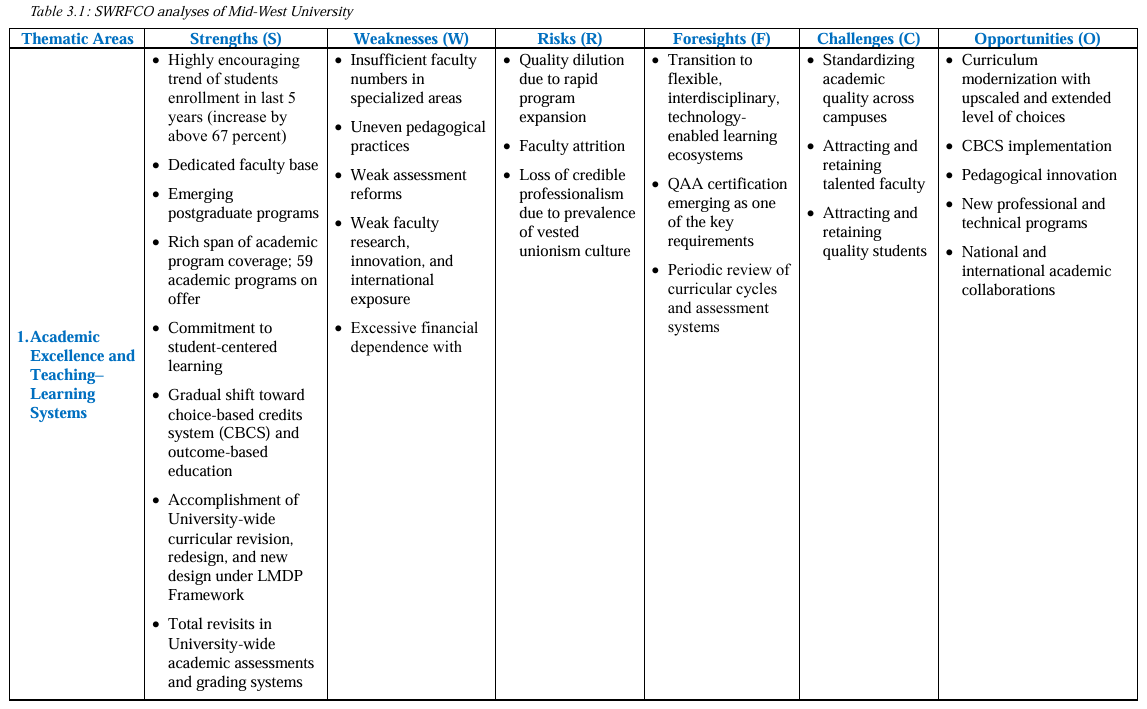
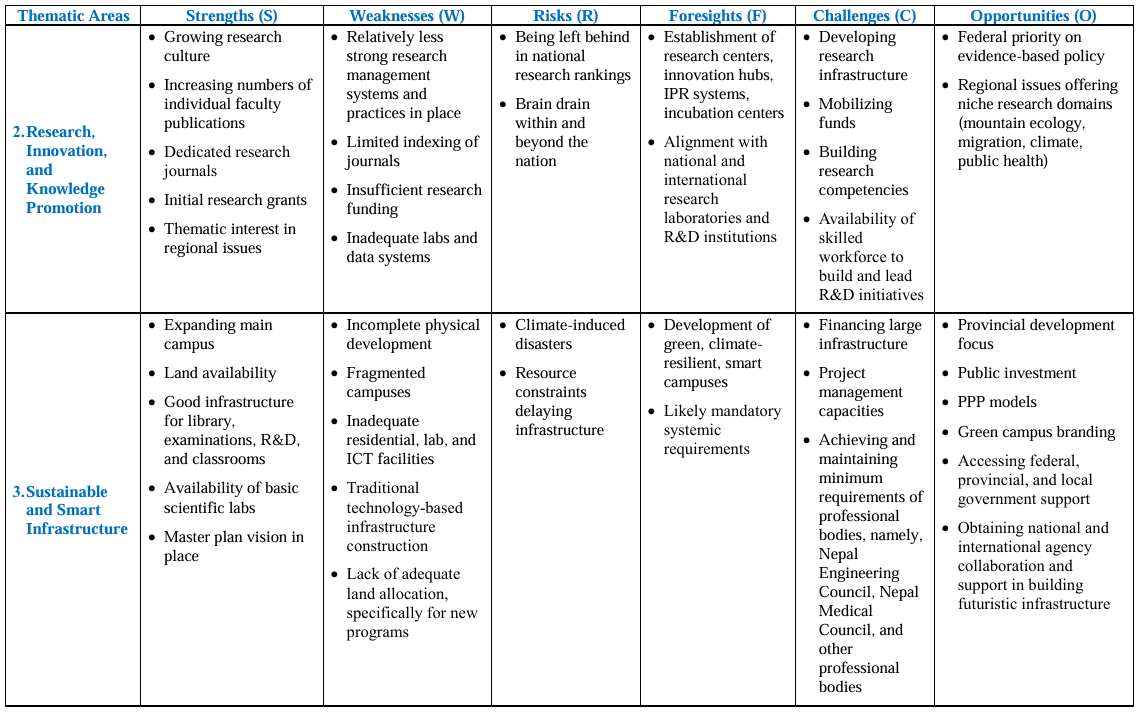
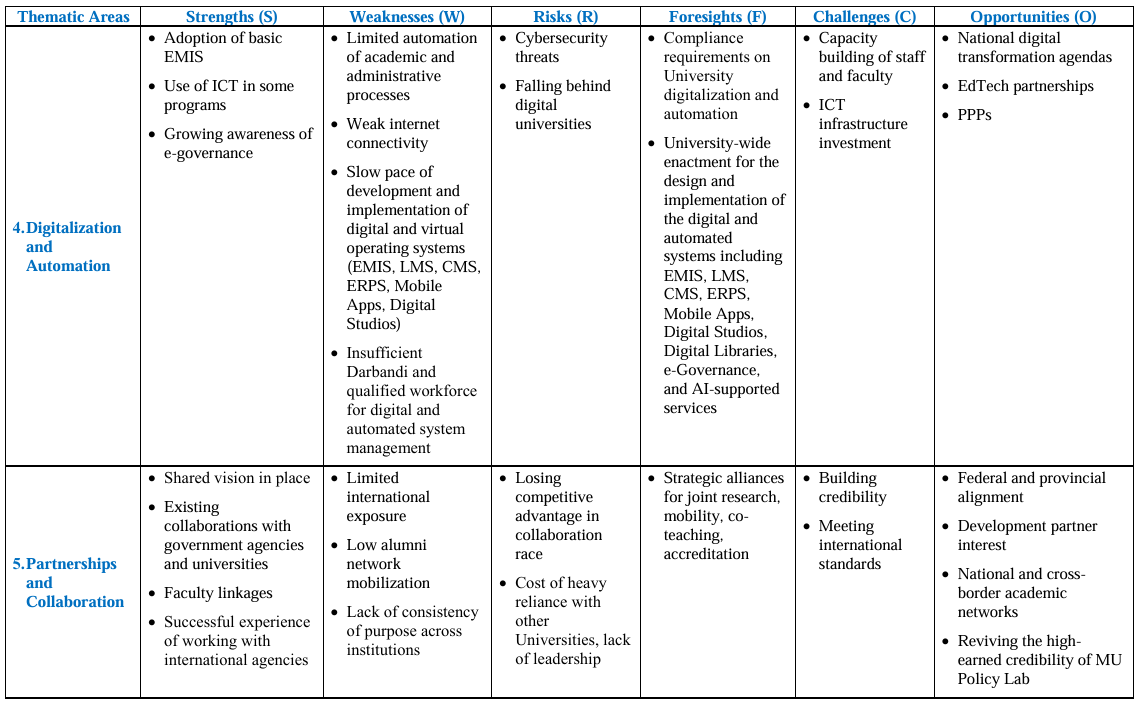
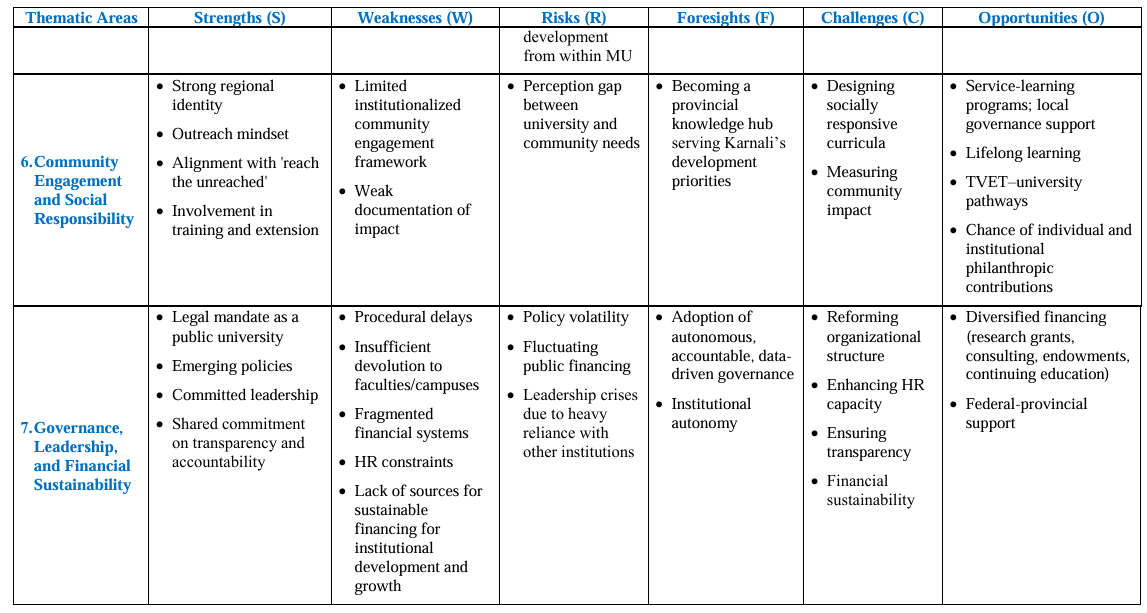 The S-W-R-F--CO analysis provides an insightful reflection on Mid-West University’s current position, highlighting its strengths, weaknesses, risks, foresight, challenges, and opportunities. This analysis serves as a key foundation for shaping the University’s strategic direction as it seeks to enhance its institutional capacity, drive academic excellence, and become a leading force in the transformation of higher education in Nepal’s federal context.
Strengths: MU boasts several core strengths, most notably its strong foundational platform, which includes a dedicated faculty base and a clear public mandate to 'reach the unreached.' Additionally, the University’s expanding academic programs and growing research interests among faculty members further reinforce its strengths. The development potential of its campuses and land holdings, coupled with increasing recognition of MU’s role in the human development of Karnali Province, positions the University as a key educational hub in the region.
Weaknesses: Despite these strengths, several structural and systemic weaknesses need addressing. These include limited research infrastructure and insufficient digital and laboratory facilities, which hinder the University's ability to meet modern educational and research demands. There is also uneven academic quality across programs and campuses, exacerbated by staffing gaps in specialized disciplines. Furthermore, fragmented governance and financial systems risk impeding growth, potentially diminishing the University’s academic standards and competitive edge.
Risks: The analysis identifies key risks such as policy volatility, faculty attrition, and the lack of integration in digital and academic systems. Additionally, MU faces challenges from climate induced vulnerabilities impacting its infrastructure. These risks, if not properly managed, could further strain the University’s resources and hinder its ability to achieve long-term institutional goals.
Foresights: However, the foresight dimension reveals significant opportunities for the University. Federal restructuring, digital transformation, and regional development priorities are emerging trends that create space for MU to adopt interdisciplinary, technology-enabled education systems. The establishment of innovation ecosystems and green, smart campuses is another opportunity that can drive the University's evolution into a globally reputed institution. Challenges: In navigating these opportunities, MU will face several challenges. These include overcoming the digital lag, addressing climate vulnerabilities, and modernizing its infrastructure. Additionally, achieving a seamless transition to a fully integrated, technology-driven educational system and enhancing research capabilities will require substantial investment and strategic leadership.
Opportunities: The opportunities before MU are substantial. The expansion of federal and provincial investments in education, along with rising demand for context-specific programs in agriculture, forestry, health, climate resilience, and governance, creates a favorable environment for institutional growth. Additionally, increasing youth aspirations for higher education and the potential for strategic national and international partnerships offer further pathways for academic innovation and research excellence.
Strategic Partnerships: MU’s growth prospects are further enhanced by the potential for strengthening partnerships with national and international institutions, development partners, and governments. These collaborations can accelerate research productivity, support the development of new programs, and improve graduate employability. Such partnerships also position the University to expand its global outreach and enhance its academic reputation.
This S-W-R-F-C-O analysis confirms that Mid-West University stands at a pivotal moment in its development. To capitalize on its strengths, address weaknesses, manage risks, and seize emerging opportunities, the University must strategically focus on enhancing governance, expanding research infrastructure, and improving its digital capacity. Additionally, diversifying resources and developing community-responsive programs are critical for ensuring the University’s future success and its contribution to both regional and national development.